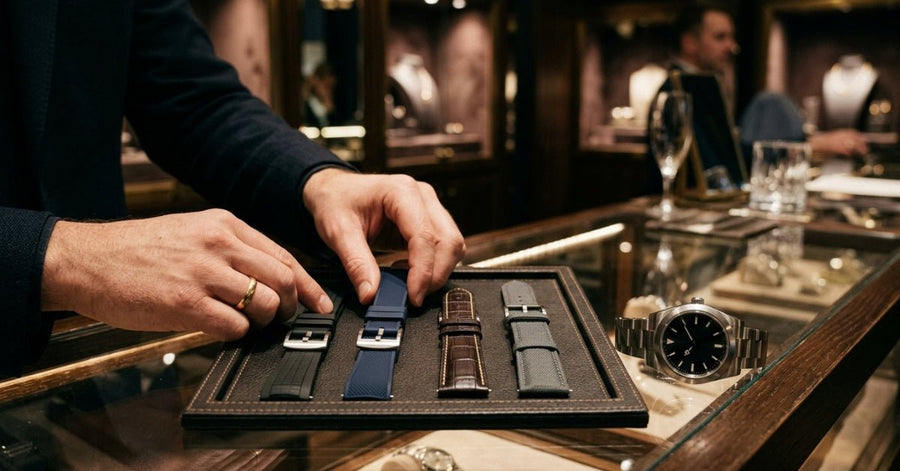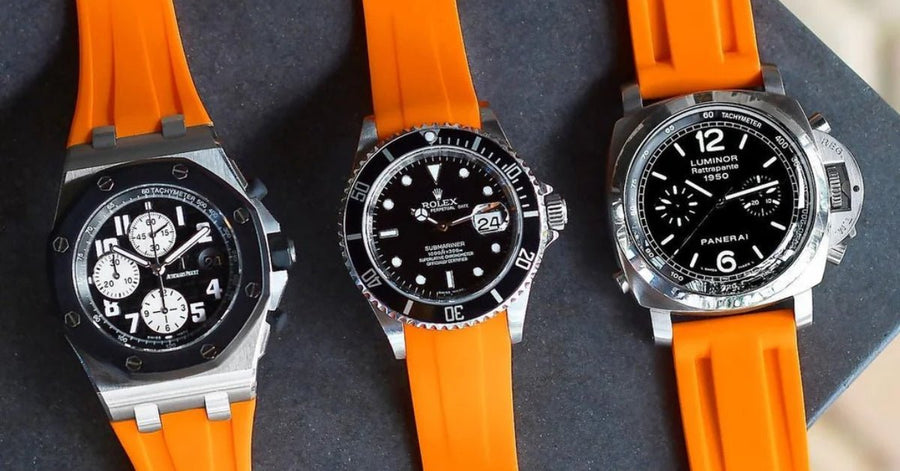



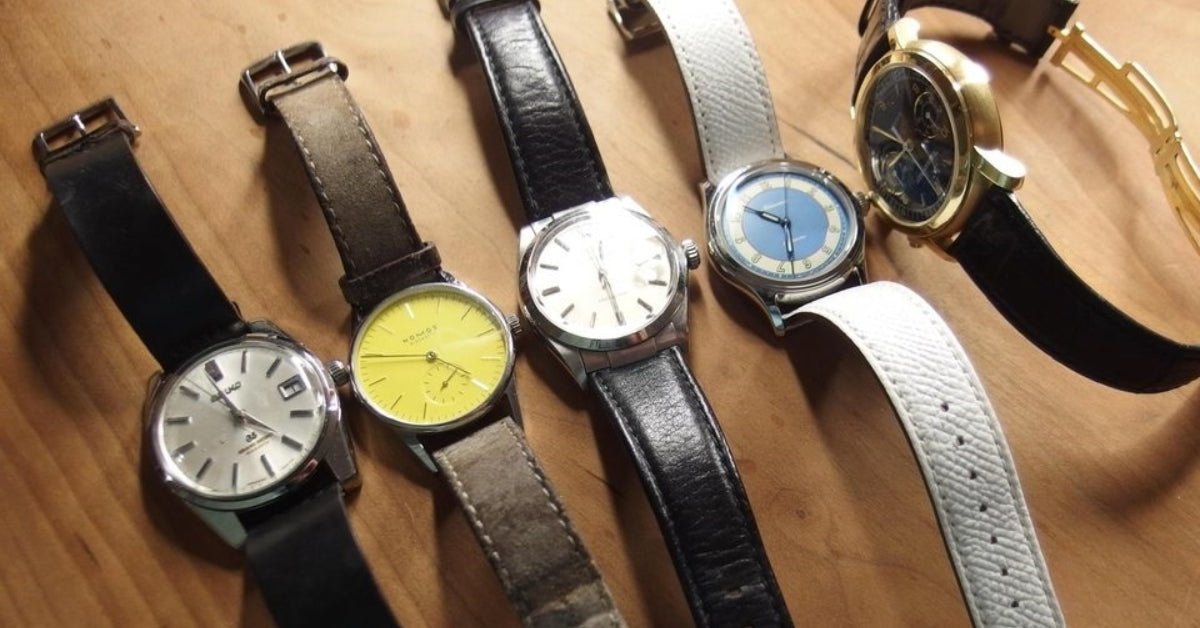
There's a moment in most strap journeys where the obvious materials are covered. You've added FKM rubber for sport and water. You've added quality calfskin for office and dress-casual. You've maybe added alligator for genuinely formal occasions. The wardrobe is functional and complete in any practical sense. And then, six or twelve months later, you start to want something different — a strap that doesn't disappear into the watch but adds personality, that has texture you can feel and see, that sparks a conversation when someone glances at your wrist.
That's the entry point for suede, ostrich, and the broader exotic leather category. None of these materials are necessary. All of them earn their place through character — the qualities that calfskin and alligator deliberately don't have, that rubber and sailcloth can't have. This guide covers when each material is right, how to style each one, what watches each pairs best with, and how to care for materials that need different treatment from your everyday straps.
The guide assumes you already have your foundation tier in place. If you don't, our strap wardrobe article covers the order to build in — these materials are the fifth, sixth, or seventh strap, not the first.
What Makes a Material "Exotic" or "Distinctive"
The terminology is loose. "Exotic leather" technically means leather from species other than cattle (so alligator, crocodile, ostrich, lizard, snake, stingray all qualify), but in practice the watch strap industry uses "exotic" more broadly for any leather with distinctive visual texture beyond standard calfskin.
For this guide, we're covering three categories of distinctive leather:
Suede. Calfskin or cowhide with the inner side of the hide buffed to create a soft, fuzzy nap. Same animal as standard leather; different finishing process. Casual luxury register.
Ostrich. Genuine ostrich hide with the distinctive raised quill follicles (the small bumps where feathers used to attach to the bird). Visibly different from any other leather. Vintage and dress register.
Other distinctive leathers. Lizard, snake, stingray, embossed calfskin, nubuck, and specialty finishes that add texture beyond standard calf without being suede or ostrich.
Alligator and crocodile have their own dedicated article because they're a foundation-tier dress watch material rather than a personality-tier addition. Standard calfskin is also covered separately. This article is specifically about the materials that exist to add visual and tactile character.
Suede: The Casual Luxury Material
Suede is the most-bought distinctive material in the strap world for one reason — it shifts the entire register of a watch in a way no other single change can. A Datejust on calfskin reads as professional. The same Datejust on a tan suede strap reads as relaxed-luxury — same watch, completely different vibe. Suede is the material that makes a dress watch wearable on a Saturday without losing the watch's quality.
What suede actually is. The technical detail matters because it explains why suede behaves the way it does. Standard leather is the outer surface of an animal hide — the grain side. Suede is made from the inner side of the same hide, which has a fibrous, fuzzy texture by nature. Tanning and finishing buff that inner surface to produce the velvety nap that defines suede.
Because the grain side of the leather has been split away, suede lacks the protective sealed surface of regular leather. That has two consequences. First, the material is much softer and more comfortable against the skin from day one — no breaking-in period. Second, the material is much more vulnerable to water, rain, and stains, because there's no sealed surface to repel them.
The register suede creates. Suede is dressier than denim, more casual than calfskin, and warmer than alligator. It belongs specifically to a "considered casual" register — the opposite of either tool-watch sportiness or full-formal dress. This makes it ideal for:
- Smart casual office days (jacket and chinos rather than full suit)
- Weekend dressy outings (lunches, gallery visits, dinners that aren't black tie)
- Autumn and winter rotation generally — suede pairs beautifully with wool, tweed, cashmere, and the heavier fabrics of cooler seasons
- Vintage and dressy-vintage watches (vintage Datejust, Tudor Black Bay 58, Cartier Pasha, vintage chronographs)
Where suede doesn't work. Three situations are wrong for suede:
- Anywhere it might get wet (rain, swimming, pool, shower, summer humidity)
- Black tie or genuinely formal events (alligator or polished calf is correct)
- Hot weather generally — suede holds heat against the wrist and shows sweat marks
The colour palette for suede. Suede takes dye in a way smooth leather doesn't, so the colour range is wider and richer than any other leather material. The colours that work consistently:
- Tan/camel/honey — the most versatile suede colour, works on virtually any watch, suits autumn and casual wear especially well
- Brown (medium to dark) — the equivalent of brown calfskin but warmer and more characterful
- Slate grey/charcoal — modern, contemporary, particularly good on dark-dial sport watches and minimalist dress watches
- Burgundy/oxblood — autumn and winter signature colour, dressy without being formal
- Forest green/olive/khaki — vintage tool-watch register, particularly good on field watches and military-style references
- Navy — versatile, works year-round, particularly good on blue-dial watches in tone-on-tone pairings
- Cognac — warm, vintage-luxury, exceptional on gold-cased or rose gold watches
Lighter suede colours (cream, off-white, pastels) exist but are higher-maintenance — they show every stain and dirty mark within weeks. Reserve them for occasional rotation.
Watch pairings that work especially well with suede:
- Rolex Datejust (any reference). Suede transforms the Datejust from office watch to weekend watch. Tan and brown work universally; burgundy and forest green for autumn rotation.
- Rolex Day-Date. Generally too formal for suede, with the exception of the rose gold variants paired with cognac or oxblood suede in winter.
- Cartier Tank, Tank Louis, Tank Américaine. Suede is the alternative to alligator on the Tank family — slightly more relaxed, especially in burgundy or forest green.
- Cartier Santos, Santos-Dumont. Tan or charcoal suede shifts the Santos toward weekend register without losing refinement.
- Cartier Pasha. Suede is exceptional on Pasha — the case design carries texture confidently.
- Tudor Black Bay 58. Tan or olive suede gives the Black Bay 58 a vintage-tool-watch feel that calfskin can't match.
- Omega Speedmaster. Tan or grey suede works particularly well on the Speedmaster's vintage register.
- IWC Pilot, Big Pilot. Brown or tan suede with rivet detail gives pilot watches a classic aviator look.
- Vintage dress watches generally. Almost any vintage Datejust, Constellation, or dress chronograph from the 1960s-1980s benefits from suede in winter rotation.
Suede care — specific and different from other leathers. Suede needs different treatment from any other strap material covered in our care articles. The basics:
- Never use water on suede. A single drop of water leaves a permanent darker spot. Cleaning is done dry.
- Use a suede brush — a small brush with soft brass or nylon bristles, available at any shoe care shop for under £15. Brush gently in one direction, then the other, to lift and clean the nap.
- Use a suede eraser — a small rubber block specifically for suede, used to lift surface stains. A clean white pencil eraser works in a pinch but isn't as effective.
- Use a suede protector spray — applied lightly from 30cm away, before wearing, to repel rain and stains. Saphir, Collonil, and Tarrago all make reputable suede protectors.
- Never apply standard leather conditioner — it will flatten and shine the nap, ruining the entire texture.
- Plan to retire and replace suede straps every 2–3 years of regular wear. They don't last as long as calfskin or alligator and shouldn't be expected to.
Helvetus's suede watch strap collection covers the major colour range across the most-bought luxury watch references.
Ostrich: The Personality Statement
If suede is the material that quietly upgrades the casual register, ostrich is the material that explicitly says "I think about my watch strap." Ostrich is instantly recognisable from any normal viewing distance — the surface is dotted with the small, raised quill follicles where the bird's feathers used to attach, creating a textured polka-dot appearance no other leather has. People notice it. Watch enthusiasts especially notice it.
What ostrich actually is. Ostrich leather is hide from farmed African ostriches (Struthio camelus). The distinctive bumps are the natural quill follicles preserved through the tanning process. Premium ostrich leather is full-grain (not split or embossed), with the quill bumps clearly visible and naturally varied across the hide.
The leather itself is genuinely durable — denser and stronger than calfskin, with natural oils that keep it supple over years. Properly tanned ostrich is one of the longest-lasting leather options for a watch strap, with a useful life of 5–10+ years of regular wear. The texture is somewhat polarising — you either love it or don't — but it ages beautifully into a softened patina that's distinctive even on heavily-worn straps.
The register ostrich creates. Ostrich is squarely in the dress and dressy-casual category. It's not casual enough for tool watches, not formal enough for black tie, and not water-friendly enough for any sport register. What it does excellently:
- Vintage and vintage-style dress watches
- Cartier Pasha, Calibre, and the dressier Cartier references
- Rose gold and yellow gold cased watches generally
- Rolex Datejust, Day-Date, and Cellini in dressy configurations
- Patek Calatrava, Vacheron Patrimony, and other dress watches as an alternative to alligator
- IWC Portofino, Portugieser
- Vintage chronographs and time-only dress watches
Where ostrich doesn't work. Ostrich is wrong on:
- Sport watches (Submariner, GMT, Daytona, Black Bay, Pelagos) — wrong register entirely
- Rectangular dress watches (Cartier Tank, JLC Reverso) — the busy texture clashes with the geometric formality
- Anywhere it might get wet
- Outdoor or sweat-heavy wear
The colour palette for ostrich. Less variation than suede — ostrich is generally available in a tighter colour range because the natural texture is the visual focus rather than the colour. The standard palette:
- Brown (medium and dark) — the most versatile ostrich, works on virtually any compatible watch
- Black — formal-leaning ostrich, works on dressier watches
- Cognac/tan — warm, vintage-luxury, exceptional on gold-cased watches
- Burgundy/oxblood — distinctive, for collectors who want the texture and the colour to both stand out
- Navy — less common, but works particularly well on blue-dial watches
Bright or pastel colours exist in ostrich but read as costume rather than considered styling. The pattern is so visually distinctive that the colour should support it rather than compete with it — conservative colours work better than bold ones.
Watch pairings that work especially well with ostrich:
- Cartier Pasha. The textbook ostrich pairing. The Pasha's case design and dial layout take ostrich confidently and the combination has been a luxury menswear signature for decades.
- Rolex Day-Date (especially gold and rose gold). Cognac or burgundy ostrich on a gold Day-Date is a classic combination that signals serious taste.
- Vintage Datejust and Datejust Thunderbird. Ostrich gives vintage Datejust references a refined personality that calfskin or alligator don't.
- Cartier Calibre, Roadster. Both are well-suited to ostrich's textured register.
- IWC Portofino, Portugieser. Brown or cognac ostrich pairs beautifully with the dress-watch register of these references.
- Patek Calatrava, AP Code 11.59, Vacheron Patrimony. Alligator is the textbook choice; ostrich is the personality alternative for collectors who want something distinctive on their dress watch.
- Vintage chronographs and dress watches generally. Almost any vintage gold-cased dress watch from the 1950s-1970s benefits from ostrich.
Ostrich care. Ostrich is more forgiving than suede but still needs specific treatment:
- Wipe with a slightly damp cloth (not soaked) every couple of weeks to remove surface dirt
- Use a soft toothbrush gently to remove dust from the quill follicle indentations — they collect dust over time more than smooth leather
- Condition every 4–6 months with a leather conditioner specifically rated for exotic leathers (Saphir Reptan is the standard choice — covered in our leather care article)
- Don't use generic leather conditioners — they can dull the natural sheen of ostrich and pool unevenly between the quill bumps
- Avoid water and humidity. Ostrich tolerates light splashes better than suede but is still leather and behaves like leather around water
Helvetus's ostrich strap collection covers the standard colour range across the major luxury watch references.
Embossed Leather: The Honest Mid-Tier
Embossed calfskin is calfskin with a textured pattern stamped into the surface to mimic exotic leathers — alligator, crocodile, ostrich, snake, lizard. When sold honestly as embossed leather at appropriate prices, it's a legitimate mid-tier option. When sold dishonestly as genuine exotic, it's a problem.
What honest embossed leather offers. A textured visual register at calfskin prices. The pattern is durable, the leather is genuine calfskin underneath, and the strap behaves like calfskin in care and wear. For owners who want exotic-leather visual character without the £200–£500 price tag of genuine exotic, embossed calf at £60–£120 is a reasonable choice.
How to identify embossed leather. Covered in detail in our alligator vs crocodile article, but quickly:
- The pattern stops or fades at the cut edge of the strap (genuine exotic shows scale structure through the full leather thickness)
- The pattern repeats too uniformly (embossing dies create regular patterns; nature creates organic ones)
- The scales don't physically separate when the strap is bent (genuine exotic scales lift slightly at their edges)
- The price is substantially below £100 for what's claimed to be exotic
When embossed makes sense. As an alternative to genuine exotic when:
- Budget is constrained
- You're testing whether you actually like exotic-leather styling before committing to a £300+ alligator
- You want the look on multiple watches without buying multiple genuine exotics
- You explicitly prefer the lower-maintenance care profile of calfskin to genuine exotic
When to skip embossed and go genuine. When the watch is significant enough to warrant matching strap quality (any watch over £10,000), when you want the strap to age into a patina (genuine exotic ages; embossed calf doesn't develop the same character), and when you specifically want the textural depth that only genuine scales or quill bumps can provide.
Other Distinctive Leathers Worth Knowing
The category extends beyond suede and ostrich. A quick reference for the other materials that occasionally appear in the strap market.
Nubuck. Similar to suede but buffed on the outer side of the hide rather than the inner side. Slightly more durable and less velvety than suede, with a finer nap. Same care profile as suede generally. Less common than suede in the watch strap market but appears in mid-tier leather collections.
Lizard. Genuine lizard leather with distinctive small, regular scales. Dressy register, less common than alligator. Usually around £200–£400 for premium quality. Best on small-cased dress watches where the smaller scale pattern is in proportion.
Snake (python, watersnake). Available but rare in serious watch straps. The pattern is highly variable and can read as either elegant or costume depending on execution. CITES regulations apply. Best reserved for collectors with established exotic-leather rotations who specifically want this aesthetic.
Stingray (galuchat / shagreen). Distinctive raised pebbled texture, used historically in luxury accessories since the 18th century. Highly durable. Niche but legitimate option for collectors who want something genuinely unusual. Premium pricing — £400+ for quality.
Shell cordovan. Premium horsehide from a specific gland near the horse's hindquarters. Distinctively glossy with a natural sheen, ages beautifully. Used in dress shoes (Alden, Carmina) and occasionally in watch straps. Expensive — £300+ for quality. Wears for decades with proper care.
Distressed/aged calfskin. Calfskin treated to look pre-aged or vintage. Common on Panerai-style and military-style straps. Not technically exotic but adds visual character beyond standard calf.
Building Your Personality Tier
If you're adding a distinctive leather to an existing strap rotation, the order that makes most sense:
First addition: Suede in a versatile colour. Tan, brown, or grey suede is the most flexible distinctive material. It covers casual-luxury register that nothing else in your wardrobe addresses.
Second addition: Ostrich in a classic colour. Brown or cognac ostrich on your dressy watch (Datejust, Day-Date, Cartier Pasha) adds personality without committing to anything more unusual.
Third addition: A second suede in seasonal colour. Burgundy or forest green suede for autumn/winter rotation, building out the distinctive material category.
Fourth addition: Specialty leather (nubuck, shell cordovan, distressed calf). At this point you're an enthusiast curating depth in the rotation. Pick what specifically appeals.
Each addition should be a deliberate choice rather than completing a checklist. Distinctive materials are personality; if a particular material doesn't appeal to you, skip it. The wardrobe should reflect your actual styling preferences, not a generic comprehensive collection.
Styling Distinctive Leathers: Five Principles
The materials require slightly more considered styling than calfskin or rubber. Five principles that apply consistently:
1. Match the strap warmth to the watch case metal. Yellow gold and rose gold cases want warm strap colours (cognac, tan, oxblood, brown). Steel and white gold cases work with both warm and cool. This applies more strictly to ostrich and exotic leathers than to calfskin because the textured surface makes the colour more visible.
2. Match the strap formality to the watch register. Suede is dressy-casual. Ostrich is dress and dressy-casual. Neither is for sport watches, neither is for black tie. Don't fight the material's natural register.
3. Coordinate with other leather goods, but don't exact-match. A brown suede strap pairs well with brown leather shoes and belt — but the colours should be in the same family rather than identical matches. Slight variation in tone reads as considered; exact matches can read as costumed.
4. Use distinctive leather as the visual focal point, not as one of many. If you're wearing an ostrich strap, your other leather accessories should be quieter. If you're wearing a textured suit (tweed, herringbone), your strap should be smoother. Layered visual texture across multiple accessories creates noise rather than sophistication.
5. Plan for the season. Suede and ostrich are autumn and winter materials primarily. Light suedes (cream, sand, light tan) work for spring. Heavy suedes (burgundy, forest, brown) work for autumn and winter. Reserve them for the seasons they belong to and rotate to rubber, sailcloth, or smooth calfskin in summer.
Frequently Asked Questions
What's the easiest distinctive leather to start with? Tan or brown suede. It's the most versatile colour in the most flexible distinctive material, works across a wide range of watches, and has the lowest barrier to "looks right" out of the box.
Will distinctive leather straps last as long as calfskin or alligator? Suede typically lasts 2–3 years of regular wear. Ostrich lasts 5–10+ years of regular wear. Calfskin lasts 12–24 months. Alligator lasts 3–5+ years. The lifespan ranking depends more on how often the strap is worn than on the material itself — a suede strap rotated occasionally lasts much longer than a calfskin strap worn daily.
Are these materials genuinely worth the premium over calfskin? For the right buyer, yes. The premium is for visual character, not for any functional advantage. If you want a strap that disappears into the watch, calfskin is correct. If you want a strap that adds to the watch, distinctive leathers do that.
Can I wear suede or ostrich in the rain? Suede, no — water leaves permanent marks. Ostrich tolerates light splashes but isn't waterproof. Both should be removed if you'll genuinely encounter water during wear (rainstorm, water sport, pool, beach). Switch to rubber or sailcloth for wet conditions.
Can I wear suede in summer? Light suedes (sand, light tan, cream) in dry summer conditions are fine. Heavy suedes in humid summer conditions develop sweat marks and can warp. Generally suede is an autumn-and-winter material. If you want a textured strap for summer, sailcloth or light-coloured calfskin are better choices.
Is ostrich farming ethical? Commercial ostrich farming operates under regulatory frameworks similar to other livestock industries. Most premium ostrich leather comes from South African farms operating under regulated conditions. Whether this satisfies your personal ethics is your call — the situation is broadly comparable to leather sourced from cattle, lamb, or other commercial livestock industries.
What's the difference between nubuck and suede? Nubuck is buffed from the outer (grain) side of the hide; suede is buffed from the inner side. Both have soft fuzzy textures, but nubuck is typically slightly more durable and slightly less velvety. Visually similar at a distance; technically different.
Do exotic leathers require CITES documentation? Alligator, crocodile, certain snake species, stingray, and certain lizards are CITES-regulated. Ostrich is not (commercial farmed ostrich is exempt). Suede made from cattle is not regulated. When buying genuine exotic, reputable sellers provide CITES paperwork — covered in our alligator vs crocodile article in detail.
How should I store distinctive leather straps when not worn? Flat or hanging in a drawer or watch case, away from direct sunlight, in a cool dry place. Don't store suede in plastic bags (lack of airflow can encourage mildew). Cedar drawer inserts are useful — they absorb moisture and discourage moths. For long-term storage, a watch roll with separate compartments per strap works well.
Will distinctive leather straps affect my watch's resale value? No. Strap choice doesn't affect watch resale value as long as you keep the OEM bracelet to include with the sale. Aftermarket straps are a personal choice; the watch itself is what gets valued.
The Bottom Line
Suede, ostrich, and the broader distinctive leather category are the personality tier of a strap wardrobe — the materials you add after the foundation tier (rubber, calfskin, alligator) is in place. None are necessary; all earn their place through visual character that other materials can't deliver.
Suede is the most accessible entry point. A tan or brown suede strap on a Datejust, Tank, or Speedmaster transforms the watch's register from professional to considered-casual without committing to anything formal. It's the autumn-and-winter rotation strap that rewards ownership.
Ostrich is the personality statement. A cognac or brown ostrich strap on a gold Day-Date, vintage chronograph, or Cartier Pasha is a styling move other watch enthusiasts notice. The texture is polarising; collectors who appreciate it appreciate it strongly.
Both materials need slightly different care from your everyday straps — suede absolutely cannot get wet, ostrich tolerates light splashes but is still leather. Both reward seasonal rotation rather than daily wear. Both add visible character to a watch in a way no other material achieves.
If your existing wardrobe is solid and you're looking for the next strap that genuinely adds something rather than duplicating what you have, distinctive leather is the right next move. Start with suede in a versatile colour. Add ostrich after you've confirmed you like distinctive leather generally. Build from there based on your actual styling preferences rather than a generic checklist.
Helvetus offers premium distinctive leather straps — suede in the major colour range from tan and brown through burgundy and forest green, ostrich in classic colours suited to dress and dressy-casual watches, and alligator for genuine exotic skin in the dress register. For the foundation tier alongside these, our calfskin leather, curved-end FKM rubber, and sailcloth collections complete the rotation.
Most of our customers wear Rolex or Cartier — both are particularly well-served by distinctive leathers. The Rolex strap collection covers Datejust, Day-Date, Cellini, and other dressy Rolex references where suede and ostrich are at home. The Cartier strap collection covers Pasha, Calibre, Tank, and Santos with the appropriate distinctive-leather options for each register. Browse the full range at helvetus.com, use our Strap Finder to match the right distinctive leather to your specific watch reference, or read more on the Helvetus blog.