


For most of the past twenty years, the question "what's the watch to own" was answered before you finished asking it. A Rolex. A Submariner if you were outdoorsy, a Datejust if you were practical, a Daytona if you'd arrived. Everything else was a footnote.
That consensus is cracking. Spend ten minutes in the watch world of 2026 — the auction recaps, the market reports, the wrist shots people actually save — and one name keeps stealing the oxygen: Cartier. The Tank, the Santos, the Crash, the freshly revived Roadster. A maison that a decade ago was filed under "jewelry brand that also makes watches" is now the house serious collectors can't stop discussing, and the data has finally caught up to the chatter.
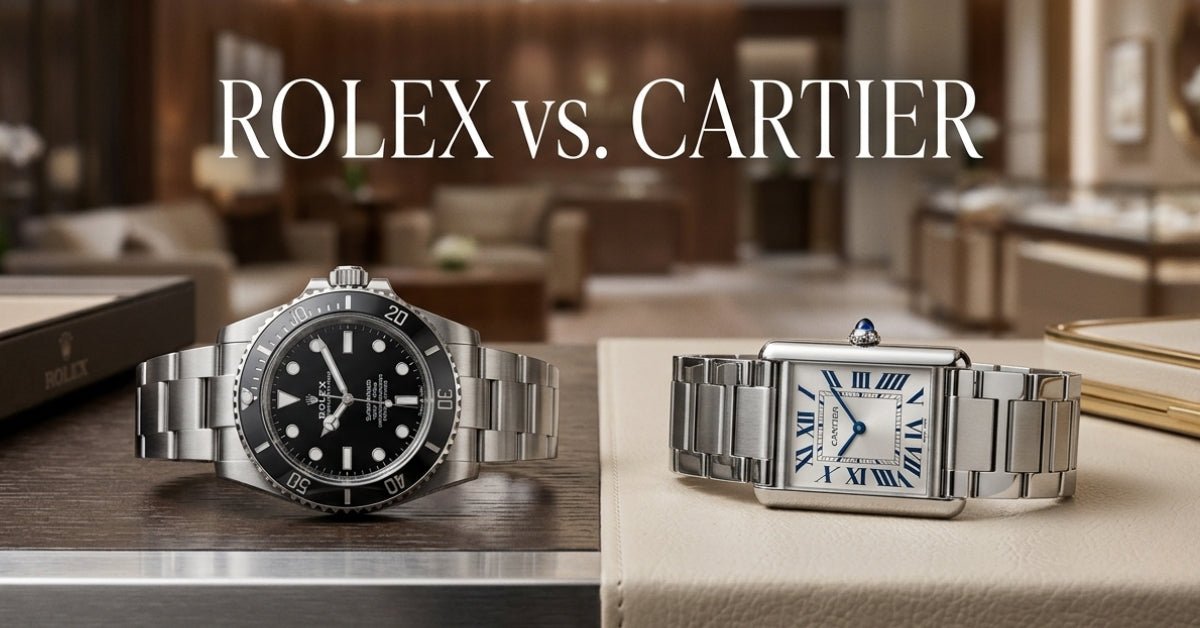
This is not a Rolex obituary. Rolex remains the biggest watch brand on the planet by a wide margin, and it isn't a contest. But the balance of power at the top of luxury watchmaking is being redrawn in real time, and 2026 is the year it became impossible to look away from. Here's what's actually going on — and, because it's the part most people skip, what it means for how you wear either one.
Is Cartier the new Rolex? What the numbers say
Start with the money, because that's where the story stops being a vibe and becomes a fact. Cartier has overtaken Omega to become the second-largest watch brand by sales, with estimated watch revenue climbing somewhere around 95% over four years — a run almost no major house has come close to matching, according to a recent breakdown of how the collecting market has shifted drawing on data from Morgan Stanley and LuxeConsult.
Then there's value retention, the metric watch buyers quietly obsess over. A Chrono24 study reported by Robb Report found that Cartier references have appreciated faster than Rolex over the past decade. The humble Must de Cartier Tank Vermeil is up nearly 300% since 2018. A best-selling Rolex Datejust 41, over the same stretch, rose roughly 59%. Both are good outcomes. One is in a different league.
Meanwhile, some of the heat has come out of the Rolex secondary market. WatchCharts' June 2026 market update had Rolex among the softer performers in recent months, even as the brand pushed through yet another round of retail price increases on June 1 — widening the gap between what a Rolex costs at the counter and what it trades for afterward. None of this signals a collapse; it reads more like a market exhaling after years of mania. But it's a noticeably different mood from the one that defined the Crown's last decade.
And the buyers driving Cartier's climb skew young. Gen Z's share of Cartier purchases on one major marketplace rose from under 2% in 2018 to nearly 7% in recent years, with smaller, dressier watches now the single biggest category that age group is chasing. The cultural proof points keep arriving, too: when a discontinued Cartier turned up on a very famous wrist in a set of engagement photos last year, the lone example one dealer had in stock was gone within hours.
Why the shift is happening now
Trends like this don't move because of a single release. They move because taste turns, and taste has well and truly turned.
For most of the 2010s, the wrist arms race ran in one direction: bigger, sportier, more steel, more lume. The watch as a piece of equipment. What's happened since is a swing back toward the opposite pole — shaped cases, slimmer profiles, gold and color, watches that behave more like jewelry than instruments. Cartier didn't chase that wave; it has been sitting on the beach the entire time, holding the exact silhouettes the market suddenly wants. The Tank, the Tortue and the Crash were "out of step" for years. Now they look like prophecy.
It helps that Cartier left a door open at the entry level. A steel Tank Must starts around $3,750 — a fraction of what the hyped steel sports watches command at resale — so the brand's surge has been powered by new buyers walking in, not just deep-pocketed collectors trading up.
There's a nostalgia engine running underneath it as well. The 2026 return of the Roadster — Cartier's cushion-cased, automotive-flavored cult favorite from the 2000s — landed squarely in a broader Y2K revival, the same current pulling early-2000s fashion back into the mainstream. And there's a quieter, more grown-up motive: with logo-flexing feeling tired, a lot of collectors now want a watch that signals taste rather than spend. Andy Warhol caught this half a century early when he said he wore his Tank not to tell the time, but simply because it was the watch to wear. That sentiment has finally gone mass-market.
The real difference is on the wrist
Here's the part the spec sheets and price charts miss entirely. The deepest difference between these two brands has almost nothing to do with movements, and everything to do with what each watch is built around.
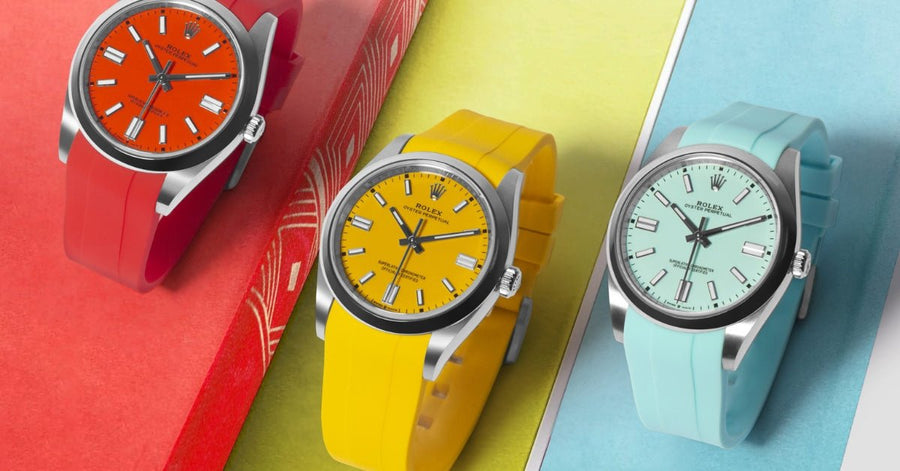
Rolex is, at its core, a bracelet company. The Oyster bracelet is so fundamental to the design that the watch can look half-dressed without it — and even Rolex's rubber option, the Oysterflex, hides a metal blade inside so it carries itself like a bracelet rather than a strap. Cartier is the mirror image: a strap house from the beginning. The Tank was born in 1917 on a plain leather strap, the case and band reading as one unbroken line, and the Santos, Tortue and Panthère have lived on straps ever since.
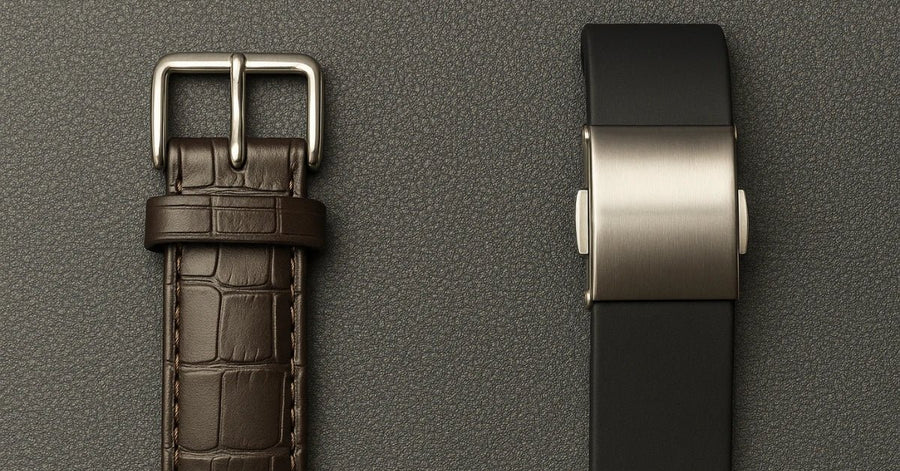
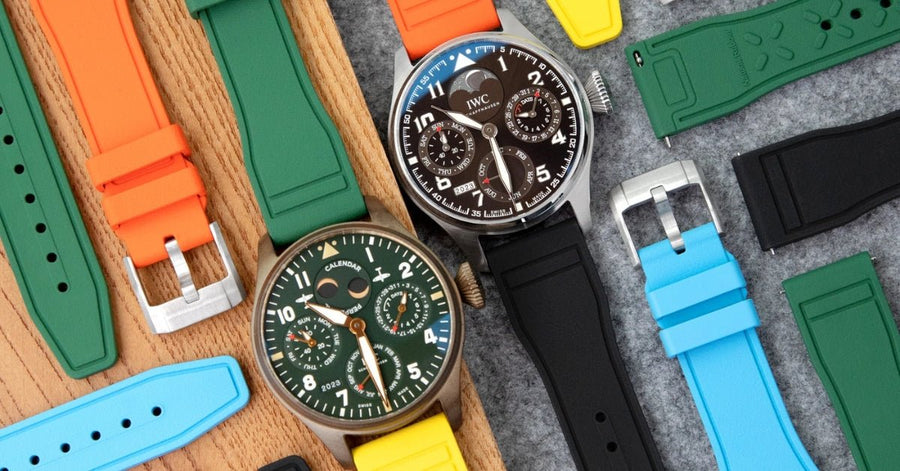
That one distinction quietly shapes how you own each watch. A Rolex shows up feeling complete, which means the single most effective way to change its character — to take a steel sports model from the office to the water, or to bring a tired factory Oysterflex back to life — is to fit a fresh rubber strap for a Rolex. The watch stays the icon; the strap does the talking. A Cartier works the other way around. The strap was never a finishing touch — it's half the design. Put a Tank on a slim alligator and it's black-tie; move it onto something textured, colorful or sporty and the same watch turns casual and contemporary. The leather strap for a Cartier Tank you choose changes the watch more dramatically than almost any other call you'll make.
The reborn Roadster proved the point better than any argument could. The version everyone fixated on in 2026 wasn't on a bracelet at all — it was the one on rubber: supple, modern, a mid-century design dragged happily into the present by its strap. When a jewelry house this traditional leans into rubber, it's telling you exactly where the wind is blowing.
So — Cartier or Rolex?
The honest answer is that framing it as a duel misses the moment. The most interesting collectors in 2026 aren't picking a side; they're learning to read the difference. Rolex is the anchor — the watch everyone recognizes, the bracelet built to outlive you. Cartier is the shape-shifter — the expressive one, the watch you reach for when you want taste to do the talking. One is a monument. The other is a mood.
What they share is more useful than the rivalry suggests: both are platforms, and the fastest way to make either one feel like yours runs through the strap. Refresh a Rolex with rubber and it becomes a true daily driver. Re-dress a Cartier with the right leather and it changes character entirely. Whichever camp you land in, the watch on your wrist was only ever the starting point — the strap is where it actually becomes yours.