


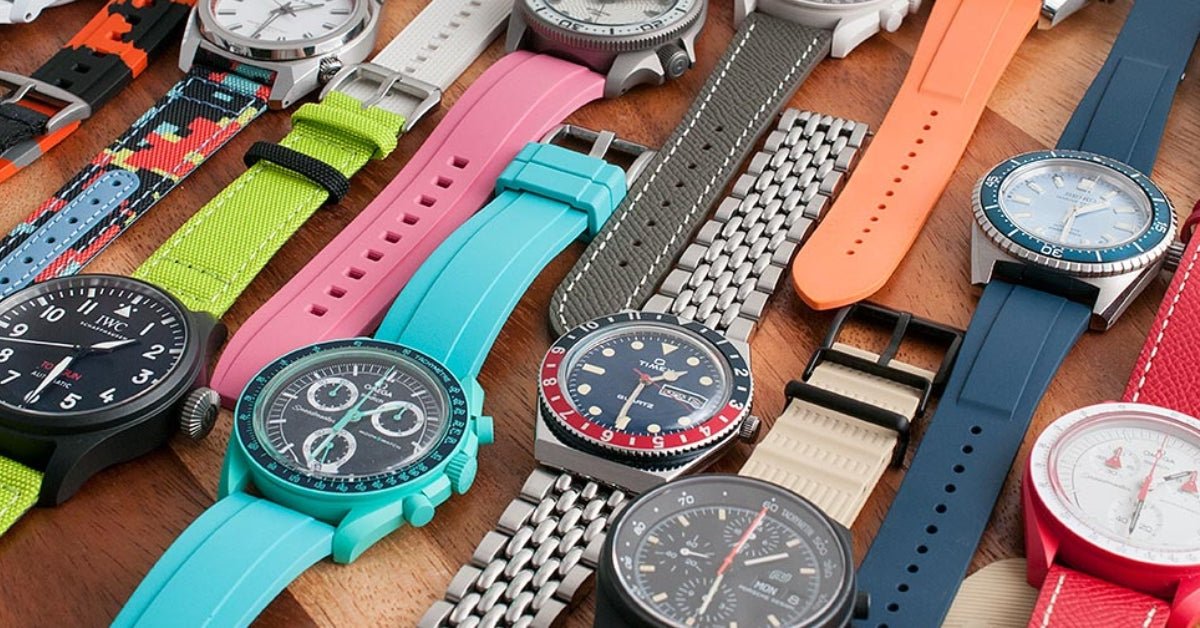
Most people pick a watch strap the same way they pick a phone case — whatever's there, whatever fits, whatever's cheap. That's a mistake, because the strap is roughly half of how the watch looks on your wrist and 100% of how it feels. The right material can make a $300 watch look like a $3,000 piece, and the wrong material can do the opposite to a Rolex.
This guide covers every watch strap material seriously worth considering, what each one does well, where it falls short, and which watches it actually belongs on. There's no single "best" material — there are appropriate ones for the occasion, the watch, and the climate. By the end you should have a strong sense of which material you want, why, and what you're trading off.
How to Think About Strap Materials Before You Buy
Before going through each material, four questions sort the field down quickly.
Where will you actually wear it? A strap that lives in pool water needs different properties from one that lives in a boardroom. Heat, sweat, water, sun, and chemical exposure all matter — and they matter at very different levels for a desk-job watch versus a dive watch versus a weekend piece.
How much do you care about ageing? Some materials get better with time. A high-quality calfskin or alligator strap develops a patina that a 10-year-old strap looks better than a brand-new one. Other materials degrade — silicone goes sticky, cheap leather cracks. The choice between "ages beautifully" and "stays new forever" is often the choice between leather and modern rubber.
Formal, casual, or in-between? A black alligator strap on a dive watch looks wrong. A bright orange rubber strap on a dress watch looks wrong. Most of the time, the strap should match the register of the watch — formal with formal, sporty with sporty — though deliberate clashing is a recognised collector move (a sport watch on a calf leather strap is a classic dressed-down-tool-watch look).
Will the watch see water? Leather and water are enemies. If you're going swimming, into the gym, into the shower, or onto a boat, you need rubber, sailcloth, or one of the synthetic options. No amount of "water-resistant treatment" will make a real leather strap actually waterproof.
With those four questions in mind, here's the field.
FKM Rubber — The Modern Workhorse
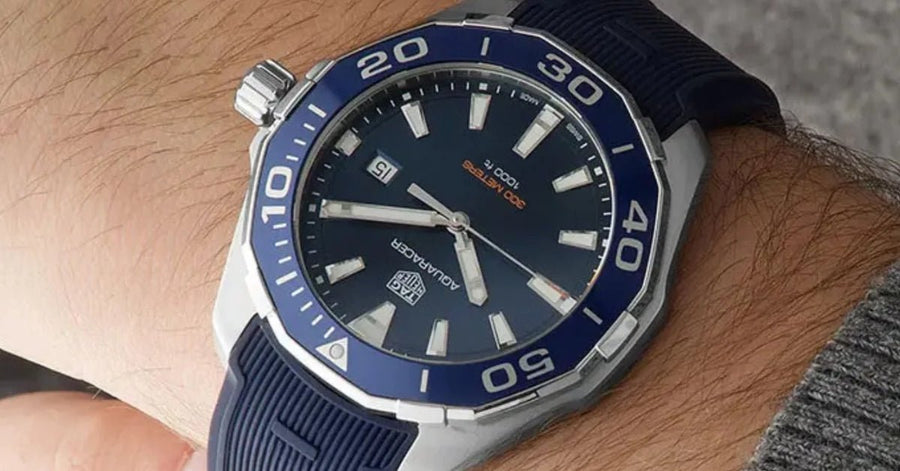
If you only own one strap besides your watch's original bracelet, this is probably the one to own. FKM (fluoroelastomer) is a high-performance synthetic rubber originally developed for aerospace and chemical-industry seals. It's the same polymer family Rolex chose for the Oysterflex bracelet on the Yacht-Master and gold Daytona, and it's what every serious aftermarket strap maker — Helvetus included — now uses for premium rubber straps.
What makes it the modern default: it's effectively immune to sweat, sunscreen, salt water, chlorine, UV, and most chemicals you'll encounter day-to-day. It doesn't attract dust and lint the way silicone does. It has a clean matte finish that looks expensive on a luxury watch in a way silicone never quite manages. With reasonable care it lasts five to ten years of daily wear without going sticky, fading, or cracking.
Where it loses points: it's stiffer than silicone for the first 48 hours of wear (it breaks in quickly), and it costs more upfront — though the longer lifespan usually evens that out per year of wear.
The two main shapes worth knowing. Curved-end FKM straps are cut to follow the case profile of a specific watch — Submariner, Daytona, Santos, Black Bay, Speedmaster, Aqua Terra. They sit flush against the case with no visible gap. Straight-end FKM straps are universal-fit and slot into any standard lug. Curved-end is the better look on watches it's designed for; straight-end is the more flexible choice if you swap watches around.
A third style, CTS (cut-to-size), is FKM trimmed to your exact wrist length using the same principle Patek uses on the Aquanaut. You cut, you fit, you have a strap that's perfect for your wrist and no one else's.
Helvetus's full FKM range covers all three: curved rubber, straight-end rubber, and CTS rubber.
Best for: dive watches, sports watches, daily wear, hot climates, anything that touches water, and luxury watches you actually use rather than baby.
Sailcloth — The In-Between
Sailcloth straps occupy a quiet middle ground between rubber and leather, and they're under-discovered. The name is slightly misleading — modern sailcloth straps aren't made from actual boat sails but from heavy-duty woven nylon that mimics the look and weave of the canvas used on yacht sails. The pattern is what you're paying for: a textured, slightly raised weave that looks technical and nautical without trying too hard.
The category effectively traces back to Blancpain's Fifty Fathoms dive watch, which has been associated with woven and reinforced fabric straps for decades and was a strong influence on the modern aftermarket. According to Blancpain's official editorial publication, Lettres du Brassus, the Fifty Fathoms sailcloth and woven straps were chosen for their robustness and water resistance — the same reasons collectors choose sailcloth today.
What makes it a smart pick: it's water-friendly, it dries fast, it's durable, and the texture works equally well dressed up or down. A sailcloth strap on a dive watch looks at home both on a boat and under a blazer — it's one of the few materials that genuinely transitions across registers without looking out of place.
Where it loses points: it's not as soft against the skin as a broken-in leather, and lower-quality sailcloth straps fray at the spring-bar holes over time. A leather lining (which Helvetus's MarinerTex sailcloth collection uses) solves the comfort problem and most of the durability problem at once.
Best for: divers, GMTs, sport-luxury hybrids, and people who want a strap that doesn't commit fully to either "tool watch" or "dress watch."
Calfskin and Italian Leather — The Classic
The default formal strap for a hundred years, and still the right answer for the majority of dress and dressy-casual watches. Calfskin leather is supple, breathable, ages beautifully into a personal patina, and works on virtually any watch that isn't purpose-built for diving. The variation between a cheap calf strap and a great one is enormous — full-grain Italian or French leather (Barenia, Box Calf, Saffiano, Epsom) is in a different league from the stiff, glossy stuff that comes on entry-level watches.
What makes a great leather strap: full-grain (not "genuine leather," which is actually a lower grade), tight even stitching, painted or folded edges that don't peel, and a soft lining that doesn't soak up sweat. A well-made calf strap on a Datejust, Cartier Tank, Cartier Santos, Speedmaster, or any Tudor model immediately elevates the watch.
Where it loses points: it's the worst material for water and the worst for hot climates. Sweat shortens its life, and a leather strap that gets repeatedly wet will eventually crack and develop an odour you can't get out. Plan to replace a daily-worn calf strap every 12–24 months, or rotate it with a rubber for the summer months.
Helvetus's leather strap collection is built around premium European hides with hand-finished edges.
Best for: dress watches, dressy-casual watches, office wear, and any watch that sees more boardrooms than beaches.
Alligator — The Formal Upgrade
Alligator is the leather you put on a watch when calfskin isn't quite enough. It's the standard top-end material for high-formality dress watches — Patek Calatrava, Vacheron Patrimony, Cartier Tank, Lange Saxonia — and there's a real reason for the price premium. Authentic alligator hide has a distinctive, even scale pattern (large square scales on the belly, smaller rounder scales toward the flanks), it's denser and longer-lasting than calf, it's resistant to creasing, and it ages with a patina that looks better at five years than at five days.
The two scale patterns worth knowing. Square scale (sometimes called "Mississippiensis" or American alligator) has the large, even, almost geometric pattern most associated with high-end dress watches. Round scale has smaller, less uniform scales and a more organic look, often used on slightly less formal pieces.
Where it loses points: like all leather, it doesn't love water. It's also the most expensive leather option by a clear margin, and authentic alligator is regulated under CITES (the international wildlife trade convention) so legitimate sources will always have export documentation — something to be aware of if you ever travel with the watch.
Crocodile is sometimes used interchangeably in marketing but is technically a different species with a different scale structure. The aesthetic difference is small; the legal classification is the same.
Helvetus's alligator collection is hand-cut from genuine alligator hides.
Best for: dress watches, formal occasions, Cartier Tank and Santos models, and any time the watch needs to look like it belongs at a black-tie event.
Suede — The Casual Luxury
Suede leather sits in a category of its own — it's the same animal as a calf strap, but the inner side of the hide is buffed to give it that distinctive soft, fuzzy nap. The result is a strap that looks more relaxed than smooth leather but still reads as luxurious. Think of it as the leather equivalent of a cashmere sweater versus a wool one.
What makes it work: suede pairs beautifully with vintage-style watches and dress-casual pieces. A grey or tan suede on a Datejust, an Explorer, a Tudor Black Bay 58, or a small dress watch shifts the watch from formal to weekend without losing presence. The colour range is also wider — suede takes dye in a way smooth leather doesn't, so you'll find rich blues, greens, oranges and burgundies that would look loud on calfskin but sit beautifully on suede.
Where it loses points: suede is the most weather-vulnerable of the leathers. Rain marks it, sweat darkens it, and a single soaking can permanently change its colour. It's not a daily-wear strap for anyone who lives somewhere wet — but as a rotation strap for dry weather and indoor wear, it adds something genuine that no other material does.
Helvetus's suede collection covers the full range of standard and seasonal colours.
Best for: dress-casual watches, vintage-style pieces, autumn and winter rotation, and anyone who wants something a little different without going all the way to exotic leather.
Ostrich — The Distinctive Flex
Ostrich leather is what you wear when you want the watch to start a conversation. It's instantly recognisable from a distance — the surface is dotted with the small, raised quill follicles where the bird's feathers used to attach, giving it a textured polka-dot appearance that no other leather has. It's also genuinely durable and surprisingly soft once broken in.
The reason to choose it: ostrich has personality in a way most leathers don't. It's still a refined material — it pairs well with dress and dressy-casual watches — but it doesn't disappear into the watch the way black calf does. A brown ostrich on a vintage gold dress watch or a Cartier Pasha is a serious move that watch people notice.
Where it loses points: it's polarising. Ostrich is either your kind of strap or it isn't, and the texture means it doesn't suit every watch — it works best on watches with relatively simple, classical case shapes that don't compete visually with the strap.
Helvetus's ostrich collection covers the main colourways.
Best for: vintage and dress watches, collectors who already own multiple calf straps and want something different, and any watch where the strap should be part of the conversation rather than just a backdrop.
Denim — The Modern Statement
Denim is the newest entry in the serious strap category, and it works better than it has any right to. The best denim straps aren't cut from old jeans — they're purpose-woven cotton denim, often treated for water resistance and lined with leather or fine fabric for comfort.
What makes it work: denim adds an instant casual register to a watch in a way that nothing else does. It pairs especially well with steel sport watches and tool watches that you wear in actual jeans-and-t-shirt situations. The texture is quietly distinctive — close up, you can see the weave; from across a room, it just reads as a navy or grey strap that looks slightly different from leather.
Where it loses points: it's the most casual material on this list and the least water-friendly. Don't wear it swimming. It's also a relatively new category, so there's wide variation in quality between makers — cheap denim straps fray and fade, while well-made ones hold their colour and structure for years.
Helvetus's DenimaTex collection is built specifically to avoid the fraying and fading problems of cheap denim straps.
Best for: weekend wear, casual dressing, sport watches, and anyone who wants to add a different texture to their rotation.
NATO and Nylon — The Casual / Military Option
NATO straps are the one-piece nylon webbing straps that originated with the British Ministry of Defence in the 1970s. The original purpose was practical: a one-piece pass-through design means that even if a spring bar fails, the watch stays attached to the wrist. The modern appeal is mostly aesthetic — they're cheap, colourful, easy to swap, and they give a watch an immediate casual register.
Where they shine: as a budget rotation option for casual wear, especially with vintage and military-style watches. A cheap NATO is a perfectly valid way to give a watch a temporary new personality for under £20.
Where they fall short: a NATO sits the watch noticeably higher off the wrist (because the strap passes underneath the case), they bulk up dressy watches in a way that rarely flatters them, and the nylon shows wear and pilling within months on the pass-through points. They're not a luxury material, and they don't pretend to be — that's part of the appeal.
Helvetus doesn't currently make NATO straps because the category is well-served by specialists at lower price points. If you want one, look to dedicated NATO makers; if you want a strap that elevates the watch rather than dressing it down, almost any of the materials above is a better choice.
Stainless Steel and Mesh Bracelets
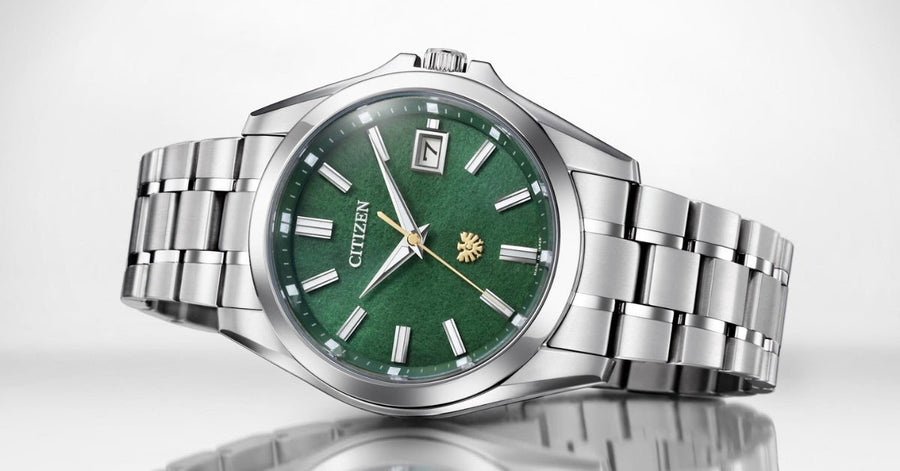
The original watch strap, in a sense — Rolex's Oyster bracelet, the most copied design in horology, dates to 1947. Steel bracelets are durable, water-friendly, and they integrate visually with steel cases in a way no separate strap can. Milanese mesh and "beads of rice" styles offer different textures within the metal category.
The reason most people own at least one steel-bracelet watch and one rubber strap: a steel bracelet is the most formal sport-watch option, and rubber is the most comfortable hot-weather option. Together they cover most situations.
Helvetus specialises in straps rather than bracelets, so for steel options you're typically working with the OEM bracelet that came with the watch.
Matching Material to Watch — The Quick Framework
Some pairings are obvious. Most aren't. The matrix below covers the common cases.
Rolex Submariner / GMT-Master / Daytona / Sea-Dweller. OEM Oyster bracelet for everyday, FKM curved rubber for summer, water, and sport. Sailcloth for the in-between. Calf or alligator only if you want to dress the watch down for an event — don't make it the daily strap.
Cartier Santos / Tank / Ballon Bleu. Calf or alligator for dress and office. FKM rubber if you want to give the Santos a sporty modern register. Suede or ostrich for vintage and seasonal rotation.
Omega Speedmaster. Calf, sailcloth, FKM rubber, or NATO. The Speedmaster takes almost any strap well — it's one of the most versatile cases in watchmaking.
Tudor Black Bay / Pelagos. FKM rubber, sailcloth, or NATO. Calf works for the Black Bay 58 in a vintage register, but most owners stay sporty.
Patek Philippe Aquanaut / Nautilus. FKM rubber and CTS rubber are the modern answers. Calf and alligator are options for the Calatrava-style dress models, less so for the integrated-bracelet sport models.
Cartier Pasha / Calibre / Roadster. These are the watches where ostrich and suede shine. Calf and alligator also work.
IWC Pilot / Big Pilot. Calf or sailcloth. NATO for the casual register. The big pilot's military DNA means it carries fabric well.
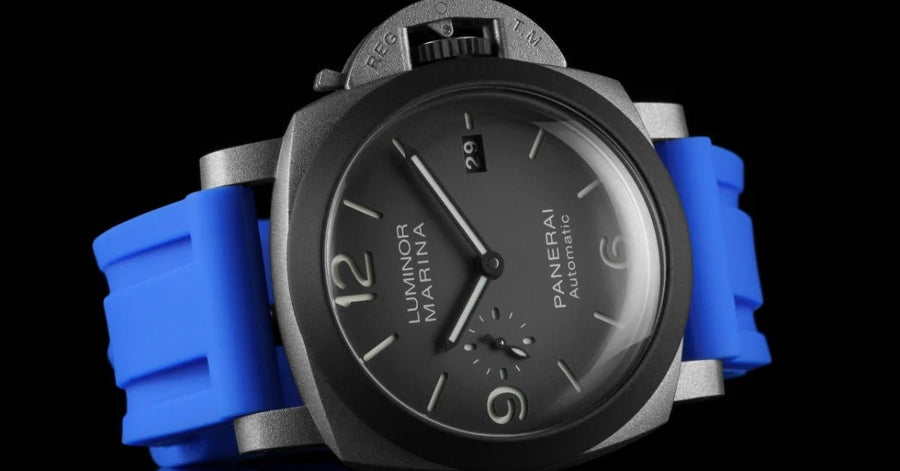
Panerai. FKM rubber, calf (especially distressed/vintage finishes), and sailcloth. The case is large enough to carry almost any strap.
If you're not sure what fits your specific watch reference, Helvetus's Strap Finder matches over 25 luxury brands to the correct width, end-fit, and material recommendation.
The Five Mistakes to Avoid
Most strap purchases that go wrong, go wrong for one of five reasons.
Buying the wrong width. Every strap is sized in millimetres to match a specific lug width. A 22mm strap on a 20mm watch leaves a visible gap; a 20mm strap on a 22mm watch doesn't fit.
Buying water-vulnerable leather for water-prone activities. A leather strap on a watch you wear in the pool, in the shower, or in heavy summer heat will be ruined within months. Use rubber, sailcloth, or denim for those situations.
Buying glossy silicone and assuming it's "rubber." Cheap silicone and quality FKM are completely different materials with completely different lifespans. If a "rubber" strap costs $15 for a luxury watch, it's almost certainly silicone.
Mismatching register. A bright orange NATO on a dress watch and a black alligator on a dive watch are both wrong, but in opposite directions. Match the strap's formality level to the watch's, or deliberately contrast — but know what you're doing.
Skipping quick-release spring bars. If you plan to swap straps regularly, quick-release saves you a tool and cuts the swap time from three minutes to thirty seconds. Most modern premium straps include them.
Frequently Asked Questions
What's the most durable watch strap material? FKM rubber by a wide margin for everyday durability. Premium FKM lasts 5–10+ years of daily wear. Stainless steel bracelets last essentially forever. Both significantly outlast leather, sailcloth, and silicone.
What strap material is most comfortable? Calf leather and silicone are the most immediately comfortable straight from the box. FKM rubber is firmer for the first 48 hours but more comfortable long-term. Comfort is subjective — try a few before deciding.
Can I wear a leather strap in the shower or at the gym? You can, but you shouldn't. Repeated water and sweat exposure cracks leather, develops odour, and shortens its life from years to months. Use rubber, sailcloth, or denim for water and sweat.
What's the most luxurious watch strap material? Alligator is the traditional top-end formal material and the standard for high-end dress watches. For modern sport-luxury watches, premium FKM rubber is the equivalent — it's what Rolex chose for the Oysterflex.
How often should I replace my watch strap? Calf leather: every 12–24 months for daily wear. Alligator: 3–5 years. FKM rubber: 5–10+ years. Sailcloth: 2–4 years. Silicone: every 6–12 months. Many collectors rotate between several straps, which extends the life of each significantly.
Is one strap material better for sensitive skin? FKM rubber and quality stainless steel are both hypoallergenic. Calf and alligator are also fine for most people. Avoid silicone if you tend to react to soft synthetics, and avoid nickel-containing alloys if you have a metal sensitivity.
Do I need different straps for different watches, or can I share one? Lug widths must match exactly, so a 20mm strap can swap between any 20mm watch you own. Many collectors keep a small collection of straps in their most common widths and rotate them across multiple watches.
The Bottom Line
The strap is half the watch, and the right material can completely change the watch's character. Most collectors end up with three or four strap materials in rotation: an FKM rubber for water and summer, a calf or alligator for formal wear, a sailcloth or NATO for casual, and one personality piece (suede, ostrich, denim) for variety. That covers virtually every situation a daily-wear watch will see.
If you're starting fresh, FKM rubber is the highest-impact first upgrade for any luxury sport watch — it transforms how the watch wears and lasts longer than any leather will. If your watch is a dress piece, a quality calfskin or alligator is the right anchor for the rotation. After that, the strap wardrobe builds itself.
Helvetus makes premium straps in every material covered above — FKM rubber (curved, straight-end, and CTS), sailcloth, calf, alligator, suede, ostrich, and denim — precision-fitted to over 25 luxury watch brands, with rubber straps backed by a lifetime warranty. Browse the full collection at helvetus.com, use the Strap Finder to match the correct fit to your watch reference, or read more on the Helvetus blog. Most of our customers wear Rolex or Cartier — if you do too, you'll find dedicated Rolex strap collections and Cartier strap collections cut to the exact case profile of your reference.