


A leather watch strap is the only part of a watch that genuinely ages with you. Done right, the leather softens, develops a patina, and looks better at three years than it did the day it arrived. Done wrong — and "wrong" includes most of the advice you'll find online — and the strap cracks, smells, stiffens, and is in the bin within a year.
The good news is that cleaning a leather strap properly takes about ten minutes, and the products that actually work cost less than a Sunday brunch. This guide walks through the right method for every leather type Helvetus makes — calfskin, alligator, suede, and ostrich — plus the surprisingly long list of things you should never do to leather, even though plenty of internet sources recommend them.
Why Leather Needs Care That Rubber Doesn't
Leather is, by definition, animal hide that's been preserved through tanning. Unlike rubber or sailcloth, it's a once-living material with natural oils that keep it supple, breathable, and structurally sound. Wear strips those oils out. Sweat strips them out faster. Sun strips them out fastest. Without intervention, the oils don't come back — and dry leather doesn't crack gradually, it cracks suddenly, usually right at the spring bar end where the strap is under tension.
The two things you're trying to do with leather care are simple: remove the dirt and oils your skin has deposited on the surface, then replace the natural leather oils that wear has stripped out. Cleaning and conditioning. They're separate steps and they happen at different intervals — most people only need to clean every couple of weeks but condition every few months.
What destroys leather, in order of severity:
Heat. Drying a wet leather strap with a hairdryer or radiator is the single fastest way to permanently warp and crack it. Air dry only, always.
Direct sunlight. UV breaks down leather's structure and fades the dye. A leather strap left on a sunny windowsill for a summer will be visibly damaged.
Submersion in water. Leather can handle a damp cloth. It cannot handle being soaked in a basin. Water displaces the natural oils and once they're gone, they're gone.
The wrong cleaning products. Rubbing alcohol, acetone, household cleaners, baby wipes (most contain alcohol), and "leather cleaners" sold for car interiors will all strip the dye and dry the leather out.
Olive oil and other kitchen oils. This is a popular forum suggestion that does serious damage. Cooking oils don't penetrate properly, they go rancid inside the leather, and the strap will smell like a chip shop within weeks.
What You Actually Need
The list is short. Most of it is in your kitchen drawer.
A microfibre cloth — two, ideally. One for cleaning, one for drying.
A small dish or bowl of lukewarm water.
A pH-neutral mild soap. Unscented hand soap works perfectly. Saddle soap is the traditional choice for leather and is easy to find at a hardware store or online for under £10. Don't use dish soap (too aggressive) or shower gel (too perfumed).
A leather conditioner made specifically for accessories or watch straps. Do not use furniture leather conditioner, car-seat conditioner, or shoe wax — they're formulated for thicker, more heavily-treated leathers and they're too aggressive for a watch strap. Saphir Médaille d'Or, Pecard Leather Dressing, and Lexol are all reputable choices. Saphir's Reptan cream is specifically formulated for exotic skins and is what most high-end leather goods specialists recommend for alligator and crocodile.
Optional but useful: a soft toothbrush (for stitching and the buckle holes), a suede brush (only if you have suede straps), and a microfibre cloth specifically for conditioning.
That's the complete list. Don't be tempted by anything else.
Step-by-Step: Cleaning Standard Calfskin and Italian Leather
This is the method for the vast majority of leather straps — calfskin, Italian Saffiano, Barenia, box calf, French calf, and any standard premium leather. It takes ten minutes.
Step 1. Remove the strap from the watch. This is non-negotiable. Soap and water near a watch case is asking for trouble, and you can't clean the underside of the strap while it's attached. If your strap has quick-release spring bars, this takes ten seconds. If it has standard spring bars, use a spring bar tool.
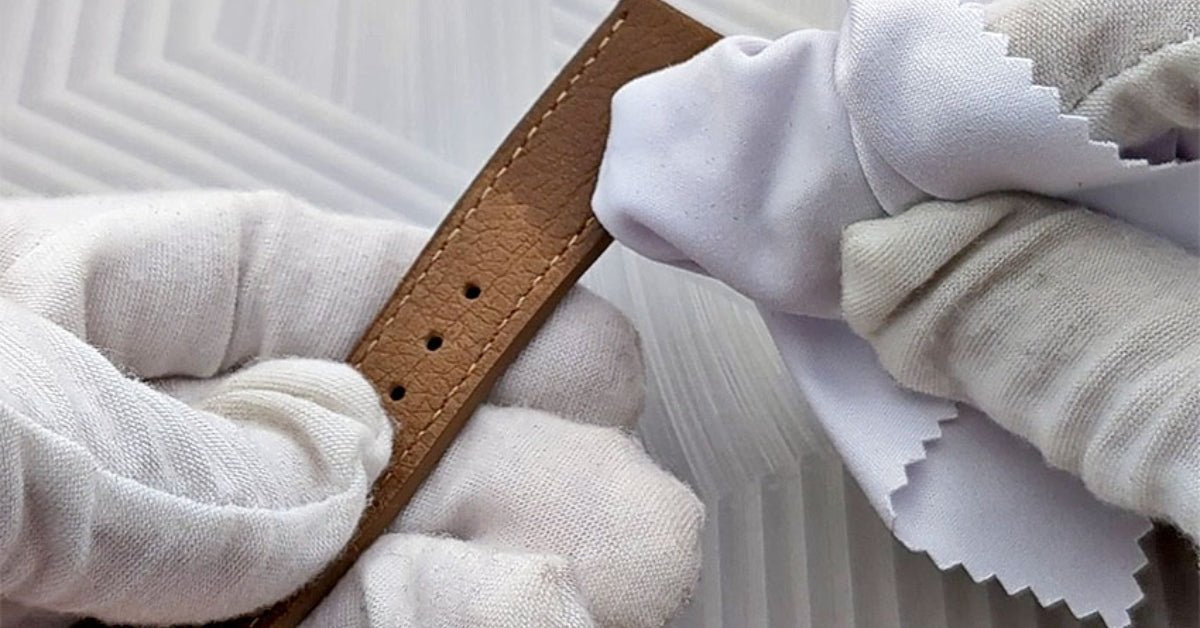
Step 2. Dry-wipe the surface. Take one of your microfibre cloths and gently wipe both sides of the strap from end to end. This removes loose dust and surface grime that would otherwise turn into mud the moment you add water. Pay extra attention to the underside, where sweat builds up.
Step 3. Damp-clean with mild soap. Slightly dampen the second microfibre cloth with lukewarm water — damp, not wet. The cloth should not be dripping. Add a single small drop of mild soap or a pea-sized amount of saddle soap. Work it into the cloth so the cloth is faintly soapy.
Now wipe the leather in gentle circular motions. Light pressure. Don't scrub — leather scratches under aggressive cleaning. Pay attention to the underside (where most of the sweat buildup lives), the area around the buckle, and the holes where the buckle pin sits. A soft toothbrush is useful for getting into the holes and any decorative stitching.
Step 4. Wipe off the soap residue. Rinse your cloth in clean water, wring it out properly so it's just damp, and wipe the strap one more time to remove any remaining soap. Soap residue left on leather will dry it out, so don't skip this step.
Step 5. Pat dry with a clean cloth. Use the dry microfibre cloth to lift off any remaining moisture. Don't rub aggressively. The goal is to remove standing water, not to dry the leather completely — that happens in the next step.
Step 6. Air dry. Lay the strap flat on a clean dry surface, away from direct sunlight, away from heat sources, and let it air dry for several hours or overnight. Depending on humidity, it can take anywhere from 4 to 24 hours. The strap is dry when it feels completely room-temperature and has no remaining moisture on the underside.
Step 7. Condition (optional, but recommended monthly). Once the strap is fully dry, apply a small amount of leather conditioner to a clean cloth — one or two drops is plenty for an entire watch strap. Work it gently into the leather using circular motions. Let it absorb for about thirty minutes, then buff lightly with a clean dry cloth to remove any excess.
Important: test the conditioner on the underside of the strap first. Some conditioners darken leather, especially lighter colours. A small test patch on the inside, where it won't show, takes thirty seconds and saves you from a strap that's two shades darker than you wanted.
That's the entire process. Done every couple of weeks for daily-wear straps, it can extend the strap's useful life from 12–18 months out to 3–5 years.
Special Care: Alligator, Crocodile and Other Exotic Leathers
Exotic skins follow the same general method as calf, with a few adjustments. The scales are denser than calfskin, which means they're slightly more forgiving of moisture but more particular about the cleaning products you use. The biggest change is the conditioner — generic leather conditioner can dull the natural sheen of exotic leather and pool unevenly between the scales.
For alligator and crocodile straps:
Follow the same steps 1 through 6 as above, but with extra care on step 3. Use even less soap, even less water, and only damp-wipe — never apply pressure that would force moisture down between the scales.
For step 7, switch to a conditioner formulated specifically for exotic skins. Saphir's Reptan cream is what most luxury leather specialists recommend, and it's what watch collectors on enthusiast forums consistently report works without darkening or dulling. Apply a tiny amount — exotic skins need much less conditioner than calfskin — and let it absorb fully before buffing.
Helvetus's alligator strap collection is built from full alligator hides, and with proper care these straps will outlast most calfskin by years. The premium price reflects a material that's structurally tougher than standard leather; treat it accordingly.
For ostrich (Helvetus's ostrich strap collection is the equivalent line), the cleaning method is identical to calfskin. The visible quill follicles can collect a small amount of dust over time — a soft toothbrush gently removes it. Don't use anything pointed or sharp around the quill bumps.
Special Care: Suede and Nubuck — Never Use Water
Suede and nubuck are completely different beasts. They're the same animal hides as smooth leather, but the surface has been buffed to give that distinctive soft fuzzy nap. That nap is the entire visual point of the strap, and water destroys it. A single drop of water leaves a dark spot that doesn't go away. Submerging suede in soapy water permanently changes the colour and crushes the texture flat.
The right method for suede:
Use a suede brush, not water. A dedicated suede brush has soft bristles that lift the nap and remove embedded dirt without compressing the surface. Brush gently in one direction, then the other, to lift the texture back up.
For stains, use a suede eraser. These are small rubber blocks specifically made for suede that lift surface stains without water. A clean white pencil eraser works in a pinch but isn't quite as effective. Rub the stain gently, then brush away the residue.
For deeper cleaning, use a suede cleaner spray. These are dry foaming products specifically formulated for suede and nubuck. Test on the underside first.
Never apply leather conditioner to suede. Standard leather conditioner will flatten and shine the nap, ruining the entire texture. If suede needs protection, use a suede-specific protector spray applied lightly from 30cm away.
If you do get water on a suede strap, blot immediately with a dry cloth, let it air dry completely, and then brush vigorously with a suede brush to lift the nap back up. Light water exposure is sometimes recoverable. Soaking is not.
Helvetus's suede strap collection is best treated as a fair-weather rotation strap rather than a daily driver — that's how to get the most out of suede.
How Often to Clean (and How Often to Condition)
These are different schedules and people often confuse them.
Cleaning is what you do to remove surface dirt and oil. For a leather strap worn daily in a normal climate, plan to clean every 2–4 weeks. For straps worn in hot or humid conditions, every 1–2 weeks. For suede or rotation pieces worn occasionally, after every few wears or whenever the strap visibly needs it.
Conditioning is what you do to replace leather oils that have been stripped out by wear. This happens far less often than cleaning. For a daily-wear leather strap, condition every 2–3 months. For occasional wear, every 4–6 months. Over-conditioning a strap is its own problem — it leaves the leather too soft, can darken the colour permanently, and creates a slightly tacky surface that attracts dust.
A simple rule: clean when the strap looks or smells like it needs it. Condition when the leather feels noticeably drier or stiffer than it did when new.
The Mistakes That Destroy Leather Watch Straps
Most leather straps don't die of old age. They die of misguided care. The list of things to avoid:
Don't use a hairdryer or radiator to dry the strap. Air dry only. Heat warps leather permanently.
Don't leave the strap in direct sunlight. UV fades the dye and dries the leather. Same applies to leaving the watch on a dashboard or sunny windowsill.
Don't soak the strap. A damp cloth is fine; a basin of water is not. Leather absorbs water unevenly and the result is rippled, warped leather that doesn't recover.
Don't use rubbing alcohol, acetone, vinegar, or ammonia. All of them strip the dye and aggressively dry the leather. Even tiny amounts cause visible damage.
Don't use baby wipes. Most contain alcohol or fragrance compounds that damage leather over time. The convenience isn't worth it.
Don't use olive oil, coconut oil, or any kitchen oil as a "natural conditioner." They don't penetrate properly, they oxidise, and they go rancid inside the leather. The strap will smell. This is one of the most common bad recommendations on watch forums and it's wrong.
Don't use furniture polish, car leather cleaner, or shoe polish as a substitute. They're formulated for thicker treated leather and they're too aggressive for a thin watch strap.
Don't condition before cleaning. Conditioner traps dirt against the leather. Always clean first, dry fully, then condition.
Don't wear the strap directly after applying lotion, perfume, or sunscreen. Give the products a few minutes to absorb into your skin before putting the watch back on. This single habit doubles the life of most leather straps.
When to Give Up and Replace
A well-cared-for leather strap should last 2–5 years for daily wear, longer if it's part of a rotation. There comes a point where care can no longer rescue a strap, and recognising it saves you from looking shabby with a watch you otherwise love.
Replace the strap when:
The leather has cracked at the spring bar end or buckle holes. Once leather cracks, there's no recovery — the structural fibre is broken and any repair is cosmetic.
The strap has developed a permanent odour despite cleaning. Sweat that's penetrated deep into the lining can become impossible to remove.
The colour has faded unevenly to the point where one half of the strap looks materially different from the other.
The lining has worn through or peeled. The lining is what touches your wrist; once it's compromised, comfort is gone and the strap chafes.
The buckle holes have stretched and the strap no longer holds tension at the right hole.
A new leather strap costs a fraction of the watch it sits on. Don't keep a tired strap on a watch you actually like.
Frequently Asked Questions
Can I shower or swim with a leather watch strap? No. Leather and water are incompatible. Repeated water exposure cracks leather, develops odour, and shortens the strap's life from years to months. Use rubber, sailcloth, or denim if your watch is going to see water.
What's the best soap for cleaning leather watch straps? Saddle soap is the traditional choice and is specifically formulated for leather. Mild unscented hand soap also works well. Avoid dish soap (too aggressive), shower gel (too perfumed), and any "antibacterial" soap (alcohol content varies).
Will leather conditioner darken my strap? Most conditioners darken light-coloured leather slightly, especially the first time. Always test on the underside first. Some conditioners (like Lexol) darken more than others (like neutral Saphir Pommadier). For light tan or natural straps, look specifically for "neutral" or "colourless" conditioners.
How do I get the smell out of a stinky leather strap? First, clean it properly using the method above. Second, place the dry strap in a sealed container with a few tablespoons of baking soda overnight (don't let the baking soda touch the leather directly — put it in a small open dish or bag). The baking soda absorbs odour molecules. If the strap still smells after that, the sweat has penetrated too deeply and it's time to replace it.
Can I clean my watch strap while it's still on the watch? You can, but you really shouldn't. Soap and water near a watch case is a bad idea, and you can't reach the underside of the strap properly. Quick-release spring bars make removal a 10-second job — there's no good reason to skip it.
How often should I condition a leather watch strap? For daily wear, every 2–3 months. Less often is better than more often — over-conditioning makes the leather too soft and attracts dust. Use a tiny amount each time, not a heavy coating.
Can I use the same conditioner for calf and alligator? You can, but you shouldn't. Calfskin conditioners can dull the natural sheen of exotic leather. Use a conditioner specifically formulated for exotics (Saphir Reptan is the standard choice) on alligator, crocodile, and other reptile skins.
The Bottom Line
A leather watch strap is the most rewarding strap material to own, and the only one that genuinely improves with age — but only if you treat it properly. Clean it every couple of weeks with mild soap and a damp cloth, dry it slowly and naturally, and condition it every few months with a product made for leather accessories. Don't soak it, don't heat it, don't expose it to direct sunlight, and don't trust internet recommendations that involve olive oil or rubbing alcohol.
Done right, a quality leather strap that costs £100 today will look better five years from now than the day it arrived, and you'll have spent maybe £15 total on care products over that entire span. That's a much better economic argument than replacing a poorly-cared-for strap every 12 months.
Helvetus offers calfskin leather straps, alligator straps, suede straps, and ostrich straps for over 25 luxury watch brands. Most of our leather customers wear Cartier, Rolex, Omega, or Tudor — if you do too, you'll find dedicated Cartier strap collections and Rolex strap collections cut to the exact case profile of your reference. Browse the full range at helvetus.com, use our Strap Finder to match the right strap to your watch, or read more on the Helvetus blog.